TABLE TIME

dinner in front of tv

by Beth Ann Morgan

Have you ever gone through a period of time with an empty seat at the table? If the vacancy continues indefinitely, the pain of a loved one’s absence can turn mealtime into a dreaded affair.

A little switcheroo might be the best thing on the menu.

While Abigail spent many weeks in the hospital over the course of her first 18 months of life, our family developed a coverage system so that either Chris or I would be with Abigail all of the time. The other parent stayed local with the other two.

We hated it. Every minute of it. The not-having-everyone-together in the same physical location while a Morgan literally teetered on the brink of death day after day after day was horrible.

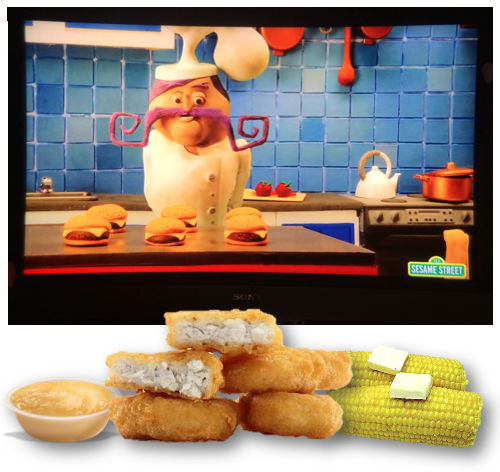
So, a few weeks into all of this, I realized I dreaded coming home on the weekends. I was thrilled to see Hannah and John, of course, but I mentally shut down at suppertime. Unless a kind soul had delivered a meal on Friday night, I served my kids chicken nuggets, corn, and applesauce. For weeks.

What kind of pediatric dietitian does that?

One that’s hurting. My husband’s empty spot at the table served as a constant reminder of Abby’s fragile state, and I had a very hard time eating at all during those days. So did my kids.

Guess what we did? A little switcheroo. We sometimes ate at the coffee table or the dining room table so that the loss wasn’t as obvious. I’m not a huge fan of eating in front of the TV, but some days, assembling a chicken nugget platter and popping in a DVD was all I could muster.

Sometimes you do what you’ve got to do. And “changing up” your table time might make a big, much-needed difference. For everbody.


 

LITTLE QUESTIONS

DRIVE

by Beth Ann Morgan

Have you ever had one of those moments after you’ve felt tremendous healing and renewed strength post-crisis when all of a sudden, out of the blue one simple question sucks the wind right out of your sail?

I had one of those yesterday.

The kids and I were chatting in the car about how God had used John’s amazing doctors to “fix” his gastroschisis, a birth defect in which his intestines formed outside of his body. Thankfully, he no longer takes medicine, and his gastroenterologist discharged John from their service roughly 18 months ago.

Then, we talked about Abby’s wonderful physicians and how they’d helped her. Such conversation is normal for us and evoked no negative emotions, only sheer thankfulness.

Not until Abby asked her question.

“But, Mommy, did they fix me?”

When did she get so old? How is it that a two-year-old is asking such a question, a question that I don’t want to answer? The answer will change her life forever. As a parent, I want to protect her, to shield her from the knowledge that her life is fragile, more than most, and that no, she is not “fixed” – and may never be.

“Sweetheart, everybody’s different. You’re doing great today, but you need to keep going to your heart doctor because God has given you a special heart to keep forever. The doctors fixed it really well, but they want to keep making sure it stays fixed. Does that sound like a good plan?”

Big nod. Big smile.

One little question took my heart down a million paths like the tour guide who grabs your arm and propels you toward the edge of the Grand Canyon while you thought you were at the souvenir shop buying a t-shirt. I expect emotional detours when I’m writing, not when I’m driving along, having happy conversation with my children on our way to the playground.

These unexpected trips have become less frequent as time goes by, but they still come out of nowhere, blindsiding me, rocking my world for a time. The questions, or shall I say the answers, will not get easier the older Abby gets, but with each passing day, our family is learning more about what it means to live full of hope despite challenges that may lurk ahead.

We choose to press on, focusing not on the eventual outcome but rather on, by God’s grace, doing today together the best we can, grateful for the gift of one more day to encourage other families while enjoying and loving ours to the max.

And for those seasons when the tough questions come?

God will be there. Just as He was in the car with us yesterday when the question came, He will be there, possibly with an answer but more importantly with Himself.

I’m forever grateful.


TOILETRY BAG

Toiletry Bag

by Beth Ann Morgan

Have you ever REALLY needed to take a shower in a situation where the only resource you had to facilitate the process was running water? The experience can prove helpful but unsatisfying.

Back in 2005, I traveled to Kenya with a medical team to speak at a conference, conduct interviews for Benard’s Vision: The Quest of a Kenyan Pastor, and assist in treating over 1200 patients.

It was the trip of a lifetime.

My team got to see and do so much, but one place I visited unexpectedly was The Aga Khan Hospital in Kisumu. I’d eaten a peanut butter and tomato sandwich, and even though I’d removed the tomatoes, I still got sick from the juice that remained.

After my body violently rid itself of the sandwich, my blood pressure began to drop. I’m prone to fainting, so this didn’t surprise anyone. Our team leader, Dr. Scott Rice, asked our host, Pastor Benard Ondiek, for an ambulance to transport me to the hospital.

His entire community moved heaven and earth to get me all the help I needed, and it humbled me greatly. They’d moved out of their houses for two weeks so that our team could move in and be comfortable. They’d sacrificed greatly to feed and protect us. And then they’d loaded me into the only ambulance in the county.

Their selflessness was beautiful to me.

The trip to the hospital was long, fodder for future posts. On the way, I realized I had nothing with me and wondered how long I would stay. The staff admitted me to the VIP suite, which had a private bed and full bathroom.

But no toiletries.

Sometimes there is no time to grab a pre-packed toiletry bag, but if there is, I recommend standing ready.


CRISIS SHOEBOX

Shoebox Image

by Beth Ann Morgan

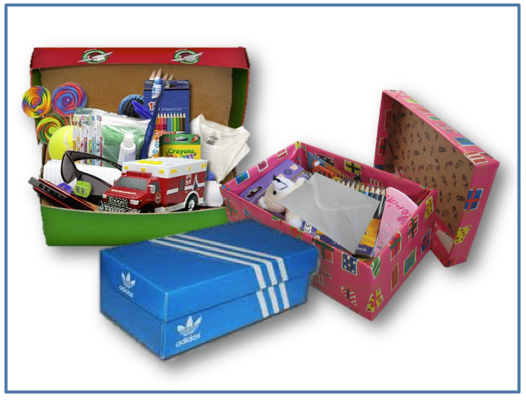
Imagine placing an ordinary shoebox crammed full of toys, stickers, games, and toiletries into the arms of an impoverished child? Operation Christmas Child (OCC), a ministry of Samaritan’s Purse, delivered over one million such shoeboxes last year and brightened the lives of children around the world with a simple gift.

We have the power to do the same.

I’ve seen the beautiful OCC videos. Children beaming from ear-to-ear, little girls twirling around holding a doll, and a ragged boy clutching a box to his chest with tears streaming down his face. For a few delightful minutes, they feel valuable, they feel loved, they feel free.

Free to be children and enjoy something special.

The challenges of life disappear for a few precious minutes as the walls of the heart tumble down and sheer joy rushes in. To know that someone far away cares enough to reach into their pain and do something fun, practical, and beautiful touches a place deep inside, a place where perhaps no one has ever come.

Today, children lie in hospitals and homeless shelters, orphanages and unhappy places all around us, children not necessarily hard up financially but physically and emotionally destitute, needing a lift of the spirit. Maybe they just got the test results. Or heard the court order. Or got more bad news.

Any day can be a shoebox day for a hurting child.

I wish I had been more sensitive to all of this earlier in life. After walking my path, I sometimes catch myself going back in my mind to the patients I’d cared for, all of the things I could have done but didn’t. I don’t stay there but focus instead on what my family and I can do today to help families going through a difficult time.

One little shoebox is all it takes.

I’ve posted a list of TEN SHOEBOX PACKING ITEMS I’ve started with in the past.   For more great ideas, please visit SamaritansPurse.org.

BEAN BINS

sensory play beans

by Beth Ann Morgan

Crisis of any kind challenges even the bravest to handle it well, but without wisdom gleaned from several years of life experience, children dealing with crisis tend to resort either to retreating in or acting out.

Ours acted out. In an all-or-nothing kind of way, a way that was totally out of my league.

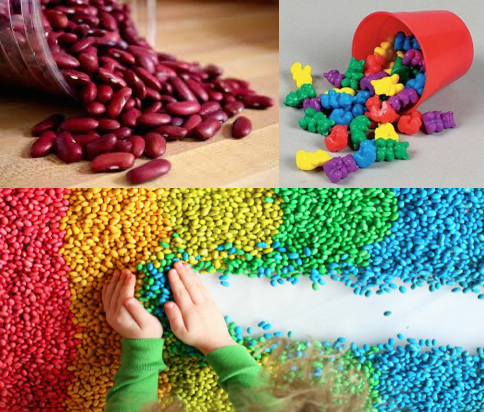
I remember the first time Lisa Hayslip, one of our Early Intervention (EI) therapists, came to our house with a boot-box size bin filled with hard, dry beans. After sitting on our family room floor, she popped off the top. Hannah gasped with delight as Lisa plunged her hand deep into the bin, wiggling her fingers all around.

Without hesitation, Hannah followed suit and played in the wonderful tub of beans, enjoying the silky smoothness and pleasant weight covering her hands. I hadn’t seen her smile like this for weeks, yet here she was, digging around for plastic teddy bears like a mole tunneling toward a big juicy worm. She scooped and dumped, slow and fast, swooshing and splashing into the tub of dark red bliss.

For a full thirty minutes.

As the session came to a close, Lisa closed up her box. Hannah’s pretty face fell. Her thirty minutes of peace and purpose dissolved like a mountain of snow on the Fourth of July.

My heart broke. That parental, “I love you so much and want to obliterate the big horrible beast that’s causing you so much pain, but if I can’t, I’m going to do everything in my power to help you through it” feeling rushed through me as we waved goodbye to Lisa.

My mind crumpled up today’s “To Do” list and tossed it into the trashcan. I picked up my keys with a smile.

“Want to hit the Dollar Tree, Sweetheart?”

THE VERY CRANKY BEAR

the very cranky bear

by Beth Ann Morgan

The timeless power of a good story continues to blow me away. Stories have the unique ability to make people relate, feel emotion, and motivate change. If you’re looking for a great parenting resource about how to deal with agitated people, I recommend a simple story titled “The Very Cranky Bear” by Nick Bland.

Even though it sells in the children’s market, I recommend it for every person on the planet. Without giving too much away, the story is about how four friends attempt to cheer up a very cranky bear. Each one tries in their own way, but one of the friends bests them all because she listens to the bear’s need without being turned off by his outward behavior.

This book changed the course of our parenting and gave us a tool that our children could not only understand but also use to better relate to each other when one of us is not at the top of our game.

Shilpa Barrantes, another Early Intervention therapist that helped our family navigate through crisis, brought this book to a session she had with our daughter, Hannah, during a tumultuous time in her two-year-old life. She loved the story and immediately began rattling off times when different members of our family had been cranky bears.

When my husband came home from work later that day, Hannah could hardly wait to tell him about the book. She recounted the tale to him as best she could and chattered happily about the ending. Her enthusiasm moved him, for she’d not responded to something like this in a long time.

He glanced sideways at me and whispered, “Buy the book.”

It arrived within the week, and we enjoyed reading it over and over again. My husband and I often chuckle when we use the phrase “very cranky bear” with each other when anyone in our family, even an adult, becomes a little grouchy. We then try to encourage each other to be “plain but thoughtful sheep.”

Complete with cute little “baa,” of course.

THE DNA OF RELATIONSHIPS

storm clouds

by Beth Ann Morgan

Crisis brings out the best – and worst – in all of us. We have a distinct choice in how we handle every relational challenge, and how we choose to handle them ultimately defines who we are.

In the midst of a raging storm, it’s all too easy to say and do things to damage our relationships. All of the late nights and skipped meals, the broken routine and disorder, the loneliness and emotional rollercoaster equates to an intricate but all-too-common recipe for disaster.

But there is hope. Crisis can be a great time to push “reset”.

When Christian and I found ourselves in the boiling pot of the thickest mess, we really struggled to relate well to each other. Our world had fallen apart and seemed to continue falling apart on a daily basis.

My husband and I loved each other like crazy, but we both carried deep pain and had little time to mentally process any of it. Over the course of many months in crisis that grew into years, small hurts festered into the blackest gangrene, a cavernous mouth that threatened to devour life and limb.

We saw the amputation coming and knew we couldn’t stop it alone. We needed help while we still loved each other enough to do the hard, dirty work and determined to not just fix our relationship but also eliminate the threat of it ever happening again.

This family had seen too many band-aids.

Our family counselor, Dr. Wayne Schantzenbach, recommended one of the best books we have ever read, The DNA of Relationships by Dr. Gary Smalley. With amazing clarity and practical help, the author teaches couples how to identify the root cause of their deepest wounds and how marital partners can unintentionally deepen their spouse’s pain instead serving as an agent of healing for each other.

We thank God for sending us a permanent solution through lots of prayer, the help of many people, scriptures, and books. Especially The DNA of Relationships. I recommend it to every married (or almost married) person on the planet.

Thank You, God.


WIPES ARE NOT JUST FOR BABIES

WIPES

by Beth Ann Morgan

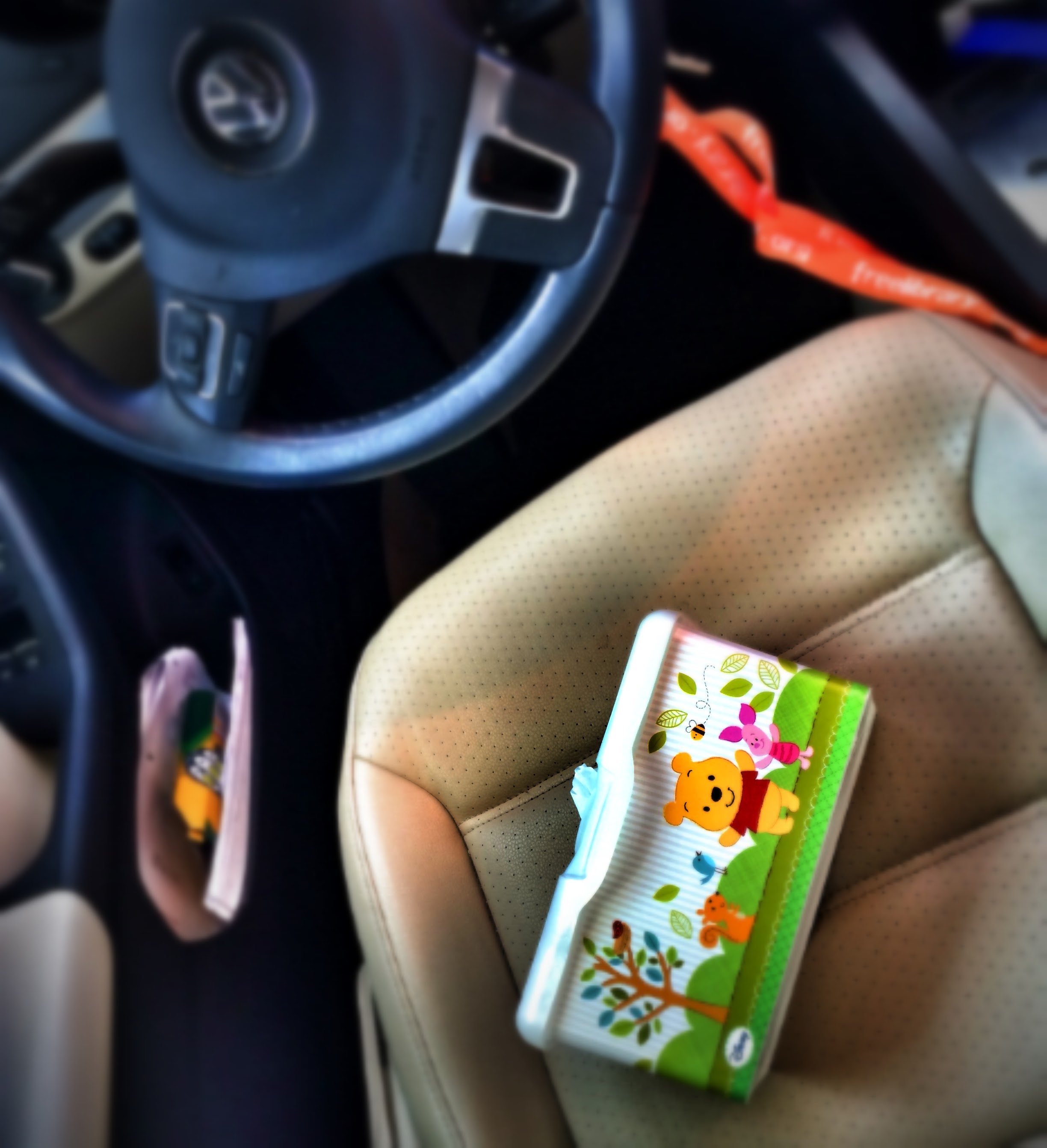
Even when I’m 85, baby wipes will accompany me in the car, in my purse, and in my home. I love them. I can think of few items that are so versatile yet affordable. I’ve even made them myself.

When I delivered my oldest daughter, Hannah, I’d needed to stay in bed more than the average mom, so my wonderful husband changed all of her diapers. He looked around for baby wipes, and finding none, he called and asked for some. Both he and I could not hide our surprise when the nurse returned and handed him a stack of what appeared to be fabric softener sheets.

He looked at me, I looked at him. The “wipes” were completely dry. No compact plastic box, no powder fresh scent, no nothing. Upon the nurse’s return, she kindly instructed my husband to moisten them under running water. The hospital had recently switched from common packaged wipes due to multiple incidents of diaper rash and yeast infections amongst their newborn patients.

We found them quite wonderful. I admit that initially, I couldn’t wait to get home and use my fancy new box of lavender-scented wipes. Not using a product (other than tap water) to clean a little bottom after removing a soiled diaper was foreign to me. However, after returning home and using our wipes for about a two-week period, Hannah’s little bottom reacted to the fragrance.

I dug out the dry hospital wipes.

Since then we’ve used any and all types of wipes. When a child appears to have any type of rash, we immediately switch to water-wipes, but other than that, we’re not fussy about wipes. We think they’re fantastic.

Definitely on the Top Ten Practical Life Helps – full list posting soon.

THE NEXT 1-2-3

1-2-3

by Beth Ann Morgan

One of the most helpful things I’ve learned as an adult is how to switch to The Next 1-2-3 thinking when I catch myself starting to feel overwhelmed. The sheer emotion of crisis threatens to consume sanity like a lion devours its prey, so I’ve learned to lean heavily on a God-sent tool that helped structure my mind.

It was subconscious at first. An Early Intervention therapist named Lisa had taught me how to structure my daughter’s daily activity by using a simple 1-2-3 method. Our family had found it effective and incorporated it into our daily life.

Little did the therapist (and I) know how critical THE NEXT 1-2-3 would become to my own survival.

Here’s how it works:

  • I ask myself, “What are the next three things I’m going to do?”
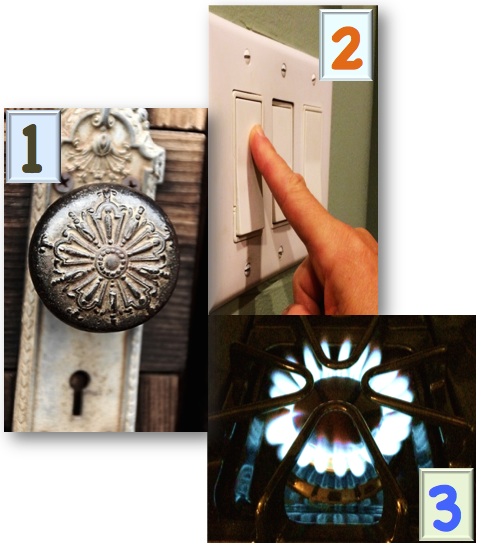
  • I formulate my plan: 1) Unlock the door. 2) Turn on the light. 3) Turn on the oven.
  • I carry out the three tasks in order.

Done. Then I would plan my next three steps: 1) Put my keys on the hook. 2) Hang up my coat. 3) Set my purse in the closet.

Sometimes it was change a diaper, wash my hands, and head downstairs. When things were incredibly tough, I completed only one task at a time.

It was all I could handle.

Minute-by-minute, task-by-task, somehow it all got done, or at least what needed to get done did. Even though I stayed busy and productive, I had minimized the decision-making process and given myself a mental mini-break by using the NEXT 1-2-3.

Sound crazy? Try it next time you’re in the middle of a substantial mess struggling to keep breathing, dragging yourself around on less than two hours of sleep.

Every bit of energy counts.

PILLOWCASE RACE

pillow race

by Beth Ann Morgan

Have wide eyes and hope-filled smiles ever greeted you at the door after a really long hard day? There’s no place you’d rather be, but your heart sinks at the thought of disappointing the ones you love the most.

When John and then Abby were in the hospital, I knew it was important to keep doing things, fun things, with the children left behind at home. The mother in me knew we needed to smile together, laugh together, and make memories together, but I was exhausted and hard-pressed for ideas

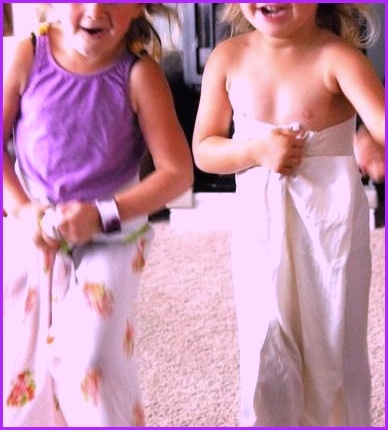
One rare evening when all of us were home before one of Abby’s critical surgeries, my husband took the initiative to lighten things up. He quietly opened the linen closet, grabbed a pillowcase, and disappeared into the upstairs bathroom while the kids remained absorbed in selecting their bedtime stories.

He emerged from the bathroom grinning from ear-to-ear. Both of his feet were inside the pillowcase, and his hands grasped the top seam at his knees. My knight in shining armor hopped over to me.

I smiled wide. Here stood my hero, yellow ducky print and all.

“Who’s ready to race?” His deep voice bellowed down the hall, and soon, we heard little feet pounding the floor. A chorus of grins and giggles erupted all at once.

“ME! ME! ME!”

Up and down the hallway we went, again and again, nobody really winning per say. The goal was to simply remain upright without trampling Abby. She typically fell within the first ten feet, giggling and rolling.

Free. Easy. Adorable.

The next time your children (and your spouse) are looking for something fun, try peeking in your linen closet for a simple and quick bedtime smile.

It’s waiting inside.


Photo courtesy of Pinterest